

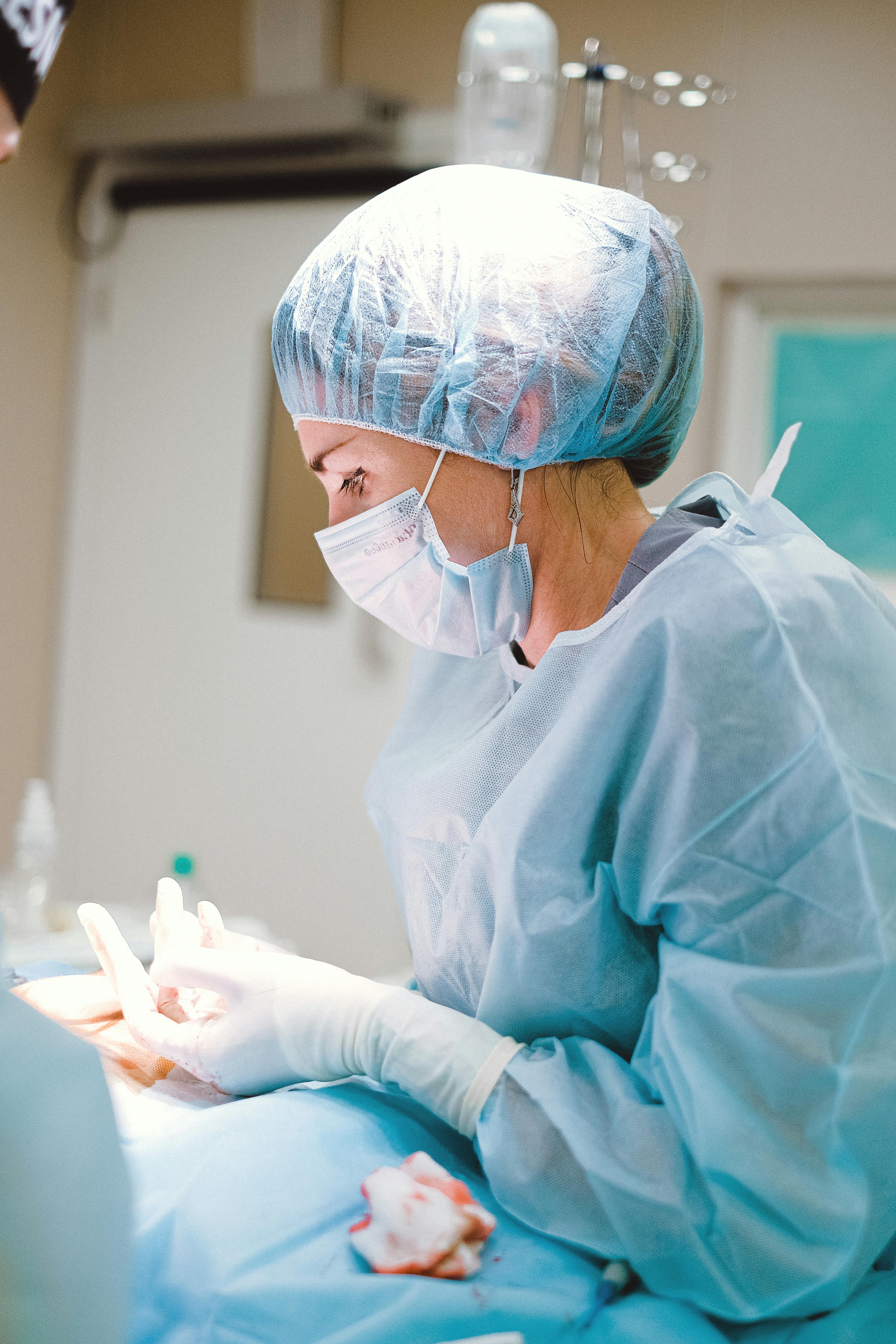
Nurses are an essential link in the health care chain, working in close collaboration with doctors. Close to patients, accessible and empathetic, this specialist in direct care and assistance must undergo rigorous training to acquire specific skills. Together, let's take a look at some of the key facts and figures.
What is a nurse?
Nurses are care specialists. Usually working in hospitals, they are responsible for the specific care and hygiene required by patients. In the course of their work, they may also be called upon to provide psychological support or carry out administrative tasks. The nature of the job means that they may have to work at night or at weekends, as medical requirements do not bend to schedules. It's a demanding job, requiring a strong sense of self-sacrifice. A sense of service and support are essential to withstand the pressures of the job.
The different missions of the nursing profession
Patient care
This is the nurse's main mission. Patient care is varied, and depends on the patient's clinical situation, working environment and specialization. Here's an overview of the main types of care these professionals can provide:
- Basic care
-
- Grooming and personal hygiene: help with washing, changing clothes, mouth, hair and nail care.
- Feeding and hydration: assistance with feeding, monitoring of specific diets and administration of gastric tubes.
- Mobilization and pressure sore prevention: assistance with position changes, mobilization of bedridden patients, wound monitoring and care.
- Technical care
-
- Administration of medication: orally, intravenously, intramuscularly or subcutaneously, following medical prescriptions and monitoring side effects.
- Wound care and dressings: cleaning, disinfecting, changing dressings and monitoring healing.
- Infusions and transfusions: setting up and monitoring intravenous infusions and blood transfusions.
- Specific care: care of medical devices such as catheters, urinary catheters or drains.
- Emergency care
-
- First aid: cardiopulmonary resuscitation (CPR), anaphylactic shock management and fracture stabilization.
- Seizure management: management of epileptic seizures, respiratory distress and other medical emergencies.
- Assessment and triage: rapid assessment of patients' condition and prioritization of care according to severity.
- Palliative care
-
- Pain management: administration of pain medication and non-pharmacological techniques to relieve pain.
- Psychological support: listening and emotional support for patients and their families.
- Preventive care
-
- Vaccinations: administration of vaccines and awareness of vaccination schedules.
- Health education: advice on lifestyle, nutrition, prevention of sexually transmitted diseases and other risk behaviors.
- Screening: participation in screening campaigns for various pathologies such as diabetes, hypertension and cancer.
- Rehabilitation care
- Functional re-education: collaboration with physiotherapists to aid physical recovery.
- Teaching adaptive techniques: use of technical aids, adaptation of daily gestures.
- Psychological support: help in managing life changes and adapting to a new health condition.
Care coordination
Nurses play a central role in this area. They liaise between the various health services, ensuring that the care provided is coherent and continuous. They work in teams with other healthcare professionals to develop and implement personalized care plans.
Medical records management
This is a secondary part of their job, but an important one nonetheless. Nurses must accurately record all information relating to patient care, including observations, treatments administered and changes in health status. This documentation is essential to ensure continuity of care and effective communication between the various parties involved.
Skills required of a nurse
Technical skills
To provide care in a comfortable and safe environment, nurses must possess technical skills such as
- Mastery of technical gestures
- Care of wounds and dressings
- Use of medical equipment
- Knowledge of pharmacology
- Resuscitation techniques
Interpersonal skills
Since they are in contact with a fragile, sick and vulnerable public, these professionals need to demonstrate many interpersonal skills in order to relieve patients of their pain, whether physical or psychological. What's more, they have to be able to work irregular and sometimes hectic schedules. All this requires characteristics such as :
- Empathy
- Compassion
- Communication skills
- Teamwork
- Conflict management
- Adaptability
- Resilience
Administrative skills
Although they do not always perform these functions within the organizations in which they work, nurses must still master office skills such as :
- Medical records management
- Planning and organization
- Knowledge of protocols
- Inventory management
- Care follow-up
Training to become a nurse
To become a nurse and apply for a job as a nurse, you need to obtain the Diplôme d'Etat d'Infirmier (DEI). This diploma takes three years to complete at an Institut de Formation en Soins Infirmiers (IFSI), and includes theoretical and practical training as well as clinical internships. It is accessible via the Parcoursup orientation platform.
In addition, nurses' aides and auxiliary nurses can follow a specific pathway for professional advancement.
After obtaining the DEI, nurses can specialize in various fields (pediatrics, anesthesia, intensive care) by taking additional training courses.
These opportunities offer nursesa wide range of career paths. They can progress to positions of responsibility, such as health executive or director of care, or move into teaching and research. Others may, for example, open a nursing facility and work as self-employed nurses.
Want to find out more about this academic path? See our Nursing studies fact sheet!
Working conditions in the nursing profession
Working conditions for nurses vary considerably depending on the setting in which they work, whether in hospitals, private practice or other environments.
In hospitals
- Working hours: often irregular, with day and night shifts, weekends and public holidays.
- Workload: can be heavy, especially in emergency, intensive care and surgical departments. In addition, nurses are often required to care for several patients simultaneously, which can generate stress and pressure.
- Work environment: hospital work is carried out in multidisciplinary teams, fostering collaboration and the exchange of information. Access to sophisticated medical equipment and specialized resources is generally assured.
- Continuing education: hospitals often offer opportunities for continuing education and specialization, enabling nurses to keep abreast of medical and technological advances.
Private practice
- Autonomy: self-employed nurses enjoy greater freedom in organizing their work, planning their visits and schedules according to patients' needs. In return, they are responsible for the administrative and financial management of their activity.
- Working hours: they can be more flexible, but require frequent travel, sometimes over long distances.
- Patient-nurse relationships: homecare allows for more personalized relationships with patients, contributing to the well-being of both parties.
Other work environments
- Schools: school nurses monitor students' health, manage emergencies and implement prevention programs. Schedules are generally regular, in line with the school calendar.
- Corporate: corporate nurses contribute to the health and well-being of employees, organize prevention campaigns and manage medical emergencies. They often work in collaboration with human resources departments and workplace safety officers.
- Rehabilitation centers and nursing homes: nurses in these establishments provide specialized care for people in rehabilitation or elderly people, often requiring continuous care and special attention. Working hours may vary, but are often more stable than in hospitals.
The challenges of the nursing profession
There are many challenges. Nursing is as demanding as it is stimulating. Nurses never get bored. They regularly meet new patients and new colleagues. Their missions are varied and their environments multiple. He/she is confronted with the routine of basic care as well as the extraordinary of emergency care. It's an exciting job, but one that requires real effort, both physical and mental. The workload is generally high, in a medical field that has been under strain for many years. Emergency situations can be trying, and regularly bring nurses face to face with death and suffering. Nurses need to be well-prepared to deal with these difficult situations, and know how to manage the human distress of patients and their families.
In addition, working hours are irregular, as patients may require medical care at any time, including nights and weekends. Finally, this is not a sedentary career. These specialists spend long hours on their feet, walking, getting up and moving around. So they need to be in good physical shape and know how to look after themselves. What's more, the nature of their work exposes them to pathogens, so they need to protect themselves against infection.
As you can see, nursing is a difficult but rewardingprofession. It's a demanding (in every sense of the word), stimulating and dynamic profession. As patients' first point of contact in the healing process, nurses are at the service of human beings and their health. Often generous, they don't count their hours, driven by a rare and precious degree of humanity.
Like this article and want to know more? Check out our nurse salary sheet!
This offer may be of interest to you
Jober can accompany you on your next professional adventure. Take a look at our special offer.
Nurse/Phlebotomist (M/F) - Belleville-en-Beaujolais 69
Employee
2153 - 2153 per month
Belleville-en-Beaujolais
A group of clinical laboratories in Belleville-en-Beaujolais, in the Rhône department, is seeking a phlebotomist (M/F) for a permanent position. Requirements - Permanent contract - Full-time - Monday through Friday - Every other Saturday from 7 a.m. to 12 p.m. The Organization You will be joining the headquarters of a group of independent laboratories that has been operating in the Rhône-Ain-Saône-et-Loire region since the 1960s. The network comprises about 20 locations and more than 150 employees, including biologists, laboratory technicians, phlebotomists, medical secretaries, and couriers, who work closely with private practitioners, nursing homes, and clinics. Furthermore, the work environment emphasizes close patient relationships and high-quality service. Compensation - Gross monthly salary of €2,153 - Recognition of prior service - Incentive and profit-sharing bonuses ranging from €3,500 to €3,800 net per year Responsibilities - Collect blood samples and various bacteriological and mycological samples - Assist with in-person and telephone customer service - Record patient files and handle administrative tasks - Receive samples collected off-site and verify their compliance - Perform pre-analytical processing of samples - Prepare samples for transport between sites and to subcontracted laboratories - Actively participate in the laboratory’s quality management system - Print reports for clients upon presentation of a voucher - Communicate validated results to prescribers Benefits - Participation and profit-sharing bonuses - Health insurance fully covered by the employer - Works Council - Lunchroom - Training opportunities for recent graduates - Manageable workload and stable hours - No work on holidays and no changes in lab assignments - Small, close-knit team and friendly work environment That Extra Something Belleville-en-Beaujolais is located in the heart of the Beaujolais wine region, renowned for its vineyard landscapes and annual festival. Additionally, the location offers a pleasant living environment with local amenities and convenient access to nearby towns. Qualifications - Registered nurse with a French state nursing diploma - Class B driver’s license required Contact us at: 07 45 01 29 85 or by email at [email protected]. Job Posting ID: 13130 Find over 4,000 healthcare job openings on our website and the Jober Group mobile app. Take advantage of a network of 1,000 partners throughout France, a team of recruitment experts ready to assist you, and a completely free service that 99% of our candidates are satisfied with.
Nurse/Phlebotomist (M/F) - Châtillon-sur-Chalaronne 01
Employee
14,20 - 14,20 per hour
Châtillon-sur-Chalaronne
Job Opening: Nurse Phlebotomist (M/F) - Châtillon-sur-Chalaronne 01 A medical laboratory in Châtillon-sur-Chalaronne, in the Ain department, is seeking a new phlebotomy nurse (M/F) for a permanent position. Job Details - Permanent contract - Monday through Friday, with every other Saturday - 7:30 a.m. to 1:00 p.m., then 2:00 p.m. to 4:00 p.m. on weekdays - Saturdays from 7:30 a.m. to 12:00 p.m. The Organization This is a small, family-run medical testing laboratory with a close-knit team and a positive work environment. The laboratory handles specimen collection, pre-analytical processing of samples, and the reporting of results to clients and physicians, all within the framework of a quality management system. Additionally, the organization offers stable work schedules, with no work on public holidays and a balanced workload. Located in the Ain department, in the heart of the Dombes region, Châtillon-sur-Chalaronne is a charming, flower-filled medieval town, renowned for its peaceful setting among ponds and countryside, near Bourg-en-Bresse and Lyon. Compensation For this position, you will earn €14.20 gross per hour. Responsibilities - Collecting blood and other samples for bacteriological and mycological testing - Greeting clients in person and answering the phone - Recording and managing patient records, including patient identification verification and coverage details for the CPAM and private health insurance - Receiving and verifying the compliance of samples collected off-site - Pre-analytical processing and preparation of samples for inter-site transport and submission to subcontractors - Printing and distributing test result reports - Participation in the laboratory’s quality management system Benefits - Small team and positive work environment - Stable schedule, with no work on holidays - Balanced workload - Participation and profit-sharing bonuses - Health insurance fully covered by the employer - Lunchroom and employee benefits That little extra Châtillon-sur-Chalaronne, recognized as one of the “Most Beautiful Detours in France,” charms visitors with its medieval half-timbered houses and historic market halls. The town was home to Saint Vincent de Paul, who founded one of his first charitable organizations there in the 17th century. Finally, nestled in the heart of the Dombes region and its thousand ponds, it offers an exceptional natural setting—a paradise for birdwatchers and lovers of outdoor walks. Job Requirements A nurse licensed in France, or a technician with a blood draw certification. A Class B driver’s license is required. Good interpersonal skills with patients and a caring attitude are expected. Contact us at 07 45 01 29 85 or by email at [email protected] Job Posting ID: 13325 Find over 4,000 healthcare job openings on our Jober Group website and mobile app. Take advantage of a network of 1,000 partners throughout France, a team of recruitment experts ready to assist you, and a completely free service that 99% of our candidates are satisfied with.
Nurse - Saint-Maur-des-Fossés 94
Employee
2000 - 2500 per month
Saint-Maur-des-Fossés
Job Nurse M/F - Saint-Maur-des-Fossés 94 We are recruiting a Nurse M/F to join a specialized nursing home located in Saint-Maur-des-Fossés in the Val-de-Marne, on a full-time CDI. Description and missions At this facility for adults with multiple disabilities, autism spectrum disorders or neurodegenerative pathologies, you will play an active role in supporting them in collaboration with a multidisciplinary team. Your responsibilities will include: - Provide nursing care in line with the specific needs of residents. - Participate in the organization and coordination of medical follow-up. - Develop and monitor individualized care plans. - Implement educational and preventive care. - Collaborate closely with medical and social teams (care assistants, AMP, psychomotricians, physiotherapists, neuropsychologists, etc.) - Contribute to a global accompaniment based on the benevolence, dignity and well-being of residents ADN of the structure This specialized home is part of a recognized association grouping 28 establishments specializing in disability. It offers comprehensive, caring care through a 44-place boarding school and a 12-place day school. The establishment is designed as a warm and stimulating place to live, where human support is at the heart of the project. You'll be part of a dynamic, committed and close-knit team, in a multi-disciplinary environment that encourages exchanges, skills development and professional fulfillment. Compensation Remuneration in accordance with collective agreement 66, taking into account seniority, with Laforcade and Ségur bonuses, as well as allowances for Sundays and public holidays. Indicative range: from €26,282 gross to €43,639 gross per year Benefits - Full-time salaried status (38.5h/week) - Salary according to seniority + Laforcade and Ségur bonuses - Humanistic and stimulating multidisciplinary environment - Warm, spacious premises adapted to residents' needs - 20 RTT per year - Reserved parking and 50% contribution to transport costs - Continuous training policy and internal mobility within the 28 facilities Profile sought State-qualified nurse with a genuine interest in supporting adults with disabilities, communicative, caring, able to establish a relationship of trust with residents and work in collaboration with care teams Contact us at: O7 45 O1 29 85 Or by e-mail via: [email protected] Advertisement reference: 10323 Find over 4,000 healthcare job offers on our Jober Group website and mobile application. Take advantage of a network of 1,000 partners throughout France, a team of recruitment experts at your service and a totally free service that 99% of our candidates are satisfied with.
See all available offers for this category