

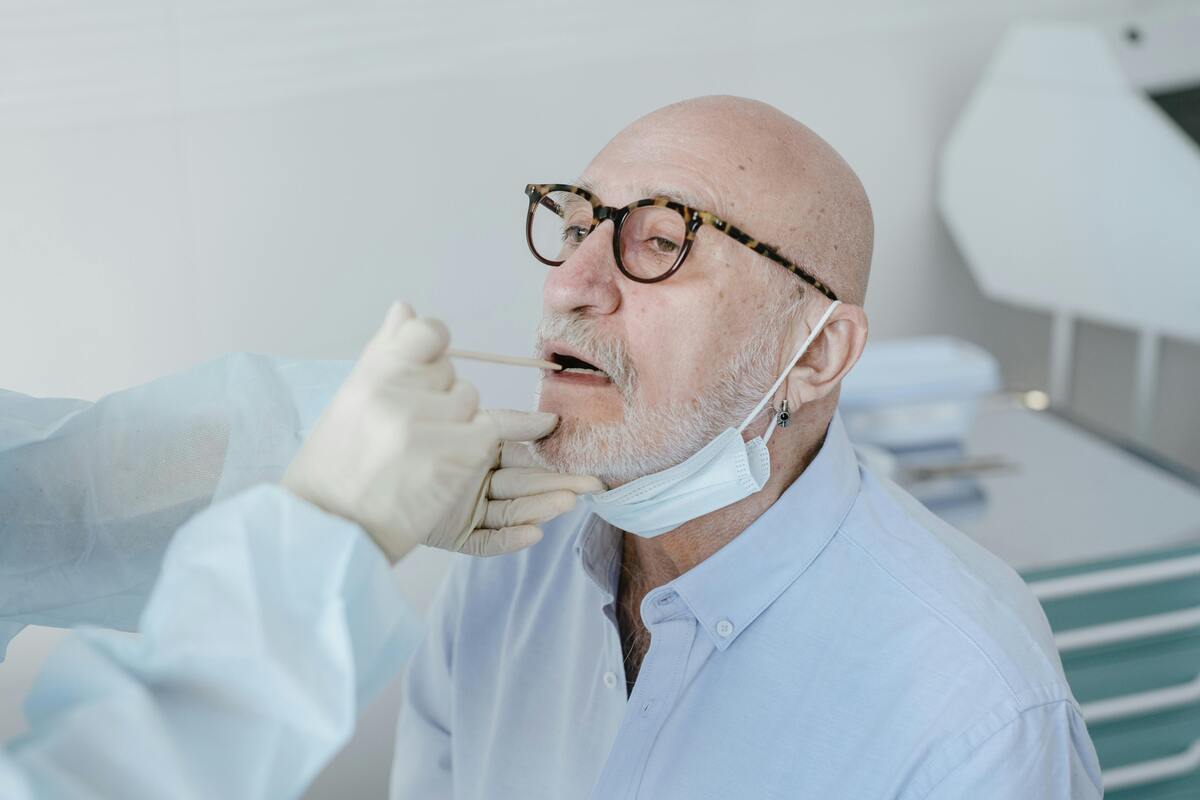
Job File: Geriatrician
Barthélemy
All job sheets
As we approach the end of life, health problems multiply, and medical care becomes indispensable rather than necessary. The vast majority of our elders require regular, dedicated support from a number of healthcare professionals. This is where the profession of geriatrician comes into its own. The geriatrician oversees all the care and treatment the patient requires. In this intimate and fragile period, during which the person gradually loses capacity and autonomy, his or her role goes beyond pure medicine. So it was time to pay tribute to this professional through one of our job descriptions.
What is a geriatrician?
Geriatrics is the medical specialty dedicated to the treatment and support of the elderly. As such, geriatricians play a dual role of doctor and carer, following their patients throughout the end of their lives and developing a much closer relationship with them than a general practitioner does with his or her patients. He adopts a transversal, multidisciplinary approach, in which he strives to heal, but also and above all to preserve the autonomy and quality of life of the patients in his care. In fact, he is the doctor of life, caring for all those who deserve to end their lives with dignity.
The geriatrician's main missions
Assessing the overall health of the elderly person
The geriatrician's main role is, of course, medical. From the very first consultation, this specialist must carry out a comprehensive assessment to better identify the patient's specific needs. This step is crucial to establishing a global diagnosis and anticipating possible developments. He or she must also
- Perform a standard medical check-up
- Evaluate cognitive functions
- Examine motor and sensory abilities
- Identify signs of malnutrition or hydration disorders
- Measure degree of autonomy
- Analyze psychological, affective and social aspects
Set up personalized, multidisciplinary follow-up care
On the basis of the assessment, the geriatrician draws up an individualized care plan, mobilizing different professionals according to the problems identified. Depending on needs, the geriatrician may
- Propose age-appropriate therapeutic protocols
- Coordinate the intervention of a multidisciplinary team
- Set up regular follow-up to adjust treatments
- Ensure compliance with treatment regimens
- Adapt the patient's living environment with the support of an occupational therapist
- Organize pain management and, if necessary, integrate palliative care
Preventing loss of autonomy and coordinating care
Prevention is a fundamental focus in geriatrics. It's not just a question of treating illness, but also of preventing deterioration in general health. The geriatrician can therefore :
- Anticipate the risk of falls (balance assessment, prescription of muscle-strengthening exercises)
- Suggest nutritional monitoring
- Detect cognitive or depressive disorders at an early stage
- Coordinate care between different levels of intervention
- Work with homecare services and medical-social establishments
- Guide families through the process of orientation
Training for the geriatrics specialty
General medical studies
Before entering higher education, aspiring geriatricians must obtain a scientific baccalaureate. Once this has been completed, students wishing to pursue health studies can choose between two options:
- The Parcours Accès Santé Spécifique (PASS)
- Introduced in 2020 to replace the former Première Année Commune aux Études de Santé (PACES), the PASS is a year of study combining a health major with a minor from another discipline. This structure makes it possible to diversify skills and offer avenues for reorientation.
- Students are assessed on the basis of continuous assessment and final exams.
- Those who pass can go on to study in the health sector.
- Those who fail can reorient themselves towards their minor before, if they so wish, trying their luck again.
- The PASS approach reduces the pressure of the former PACES exam, while diversifying students' skills.
- The Licence with Health Access (L.AS)
- Introduced in 2020 to diversify the range of training courses available in health studies, the L.AS is a course combining any major (law, humanities, economics, etc.) with a specific health minor (biology, physiology, etc.).
- At the end of the first, second or third year, and if they have passed the minimum requirements, students can apply for health studies. They then sit specific exams. Depending on their performance, they may be rejected or admitted to the second year of medical school.
- The L.AS allows students to follow a diversified pathway, encouraging skills development and reorientation.
After the PASS or the L.AS (see above), general medical studies are divided into two parts:
- The Diplôme de Formation Générale en Sciences Médicales (DFGSM) : a three-year course (the PASS and L.AS count as the first) comprising theoretical courses in medical sciences and clinical placements in hospitals.
- Diplôme de Formation Approfondie en Sciences Médicales (DFASM): a direct continuation of the DFGSM, this is a three-year course of study incorporating specialist courses and advanced internships in various hospital departments.
Externship examinations
During the final year of the second cycle, students must pass a series of tests which, depending on their results and rankings, will enable them to choose their specialty, as well as their city. Here's the list:
- Épreuves dématérialisées nationales (EDN): these take place in October and account for 60% of the final grade. To pass, students must obtain a mark of at least 14/20 in the theoretical knowledge required by all doctors, regardless of their specialty.
- Objective and Structured Clinical Examinations (OSCE): these are held in May and account for 30% of the final grade. They test students' ability to develop clinical reasoning and problem-solving skills. The minimum grade is 10/20.
- Academic progress grade: this continuous assessment takes into account the student's commitment, curriculum, mobility and level of English, and accounts for 10% of the final grade.
Specialization in geriatrics
Once they have completed their general medical studies , students specializing in geriatrics enter a five-year residency program. This course is divided into theoretical and practical training:
- Theoreticaltraining : interns follow theoretical courses covering the various aspects of geriatrics. They attend seminars and conferences to keep abreast of the latest advances and research in the field.
- Practicaltraining : geriatric interns participate in the work of various health services.
In addition, geriatric interns must write and defend a thesis in order to obtain their doctorate. On completion of this specialization, interns are awarded the Diplôme d'Études Spécialisées en Gériatrie (DES).
Further training
After obtaining the DES in geriatrics and registering with the Ordre des Médecins, a geriatrician can continue training to specialize further in specific areas of geriatrics. These specializations enable the geriatrician to develop advanced skills and gain access to even more rewarding professional opportunities, while providing high-quality care to specific populations. They also enable geriatricians to distinguish themselves on the job market by enhancing their know-how and expertise, leading to better job opportunities for geriatricians.
Skills required to become a geriatrician
Medical expertise in age-related pathologies
Geriatricians need to master the full range of chronic conditions frequently encountered by senior citizens: cardiovascular disease, cognitive disorders (notably Alzheimer's disease), osteoporosis, diabetes, cancer, neurodegenerative diseases, as well as heart, kidney and respiratory failure. They are also trained in the management of specific geriatric syndromes: polymedication, repeated falls, incontinence, weight loss, masked depression and loss of functional autonomy.
This expertise presupposes a solid ability to assess clinical complexity, identify drug interactions, prioritize interventions and adapt treatments to the patient's frailty. In addition, knowledge of standardized geriatric assessment (EGS), pharmacology adapted to the elderly, palliative care and ethics of care are valuable assets for these specialists.
Listening, patience and communication skills
Working with elderly patients requires great human qualities. Listening, patience and the ability to establish a climate of trust are essential to understanding patients' often implicit needs, explaining pathologies in an accessible way and reassuring them in the face of uncertainty or loss of autonomy.
The geriatrician must also know how to manage relations with families, who are sometimes worried, powerless or at odds with medical choices. Emotional intelligence, pedagogy, mediation and conflict management are all essential human qualities for success. You also need to know how to spot signs of psychological suffering or social isolation, sometimes expressed in a roundabout way by the elderly.
Teamwork with other health professionals
Geriatrics is based on a comprehensive, multidisciplinary approach. On a daily basis, the medical specialist works with a wide range of professionals: nurses, care assistants, physiotherapists, occupational therapists, psychologists, speech therapists, dieticians, social workers and medical specialists.
They coordinate care, organize team meetings, participate in the development of personalized care projects and in the planning of health care pathways, whether in the city, hospital or EHPAD. This collaborative work requires skills in inter-professional communication, complex case management and organization. You need to be able to federate, delegate intelligently and maintain a patient-centric vision.
Geriatricians' working conditions
Practice settings: hospital, EHPAD, private practice
Geriatricians can work in a wide variety of settings, each involving different missions and rhythms. This variety reflects the cross-disciplinary nature of geriatrics, and the need to ensure continuity of care between the home, nursing homes and hospitals.
- In hospitals, geriatricians work in a number of different departments:
- Acute geriatric medicine units (MAG)
- Geriatric short-stay units
- Continuing care and rehabilitation units (SSR)
- Cognitive-behavioral units (UCC)
- In EHPAD, their role focuses on medical coordination, long-term follow-up, prevention of complications and support in end-of-life situations. He or she may also act as coordinating physician, or provide ad hoc support to care teams.
- Geriatricianswork in private practice, treating patients in consultation, at home or in institutions. They may work alone, in a group practice, or within a multi-professional health center, which encourages exchanges with other practitioners.
Working hours, work rhythm and on-call duty
Geriatricians' working conditions vary considerably depending on the setting they choose:
- In hospital, the pace is generally brisk. Geriatricians take part in on-call duty, which requires them to be present outside normal working hours, including nights, weekends and public holidays. Care organization is often based on protocols, multidisciplinary team meetings and responsiveness to emergency situations.
- In private practice, the organization of time is more flexible, but the workload remains heavy, notably due to :
- Visits to homes and institutions
- Administrative management
- The availability required for prolonged, individualized patient care
- In nursing homes, the rhythm is more regular, but the doctor may have to intervene in emergencies or adjust care frequently according to the clinical condition of the residents. Daily presence is often required to ensure care coordination and liaison with the teams.
Relations with families and caregivers
Geriatricians never operate alone: they work in a complex human and emotional ecosystem, in which family caregivers play a fundamental role. The relationship with families is a central aspect of geriatric practice. It involves several dimensions:
- Informing: explaining the pathology, its evolution, the treatments envisaged and their effects. This requires appropriate and often repeated teaching, particularly in the case of cognitive disorders.
- Support: recognize the moral or physical exhaustion of caregivers, offer support (home help, day care, temporary accommodation) and direct them to support services.
- Involve: include caregivers in the care project, gather their opinions and value their role, while helping them to step back when necessary.
- Support: in situations of loss of autonomy or at the end of life, the geriatrician must be able to adopt a position of listening, mediation and humanity.
In short, the profession of geriatrician is perhaps the medical specialty that most closely combines care and humanity. It's a career that's as complex as it is rich, and one that demands total dedication to the care of the elderly. As Western society ages, this specialty takes on considerable importance for our elders.
Did you enjoy this article and would you like to find out more? Visit our geriatrician salary page.
This offer may be of interest to you
Jober can accompany you on your next professional adventure. Take a look at our special offer.
Geriatrician - Le Bouscat 33
Employee
80000 - 115000 per month
le Bouscat
Emploi Gériatre m/f - Bordeaux 33 As part of the development of its activity, a healthcare establishment located near Bordeaux, in the Gironde region, is looking for a new cardiologist M/F on a permanent contract. Conditions of employment - CDI - Full time - No on-call duty The structure This is a healthcare establishment located near Bordeaux, offering an activity centered on consultation, day hospital and advice to services. It has a multidisciplinary team and is currently developing a project for a technical platform dedicated to stress tests. Remuneration - in accordance with agreement ocllective 51, i.e. between €80,000 and €115,000 gross/year, depending on seniority and internship experience. Duties - Geriatric consultations - Day hospital activity (HDJ) - Advising departments The benefits - Project for a technical platform dedicated to stress testing - No on-call duty - 10 weeks' leave and RTT accumulated per year - Profit-sharing agreements and company savings plan - Proximity to Bordeaux and good transport links The little extra Bordeaux has a rich cultural offering and nearby vineyards for weekend visits. The Atlantic coast is less than an hour away for nature outings and water sports. Profile required Geriatrician qualified in France or the European Union, registered or eligible for registration with the French Medical Council. Contact us on: 07 44 71 65 08 or by e-mail at [email protected]. Ad reference : 12124 Candidates from the European Union: Jober Group, leader in the integration of healthcare professionals in France, supports you free of charge right up to the start of your activity: - Introduction to our partner teachers - Follow-up for registration with the French Medical Association - Dedicated consultant to support you Find over 4,000 healthcare job offers on our Jober Group website and mobile application. Benefit from a network of 1,000 partners throughout France, a team of recruitment experts at your service, and a totally free service that 99% of our candidates are satisfied with.
Geriatrician - Tarbes 65
Employee
7500 - 12000 per month
Tarbes
Geriatrician Job - Tarbes 65 A Groupement de Coopération Sanitaire in Tarbes, Hautes-Pyrénées, is actively seeking a geriatrician on a permanent contract. Terms and conditions - Permanent contract with executive status - Working hours: ideally 80%, full-time or part-time possible - Possibility of starting on fixed-term contract - Days worked: Monday to Friday The structure This is a territorial health cooperation group on a human scale, developing home hospitalization and coordination support activities. The structure covers an extended area around Tarbes, Lourdes, Pau and Lannemezan, and works closely with hospital and private-sector professionals. In addition, the multi-disciplinary team supports regional projects, particularly in the field of palliative care. Your salary For this position, you will be remunerated in accordance with the FEHAP 51 agreement. 208 days worked, 10 days of RTT and an annual bonus equivalent to 5% of annual salary. Responsibilities - Provide medical coordination for around 70% of office working hours - Carry out home visits for around 30% of working time - Define and monitor the patient's medical project at home - Define therapeutic adaptations according to clinical evolution - Coordinate care with care teams and partners - Participate in staff meetings, communications and organization of continuity of care - Ensure follow-up of medical records and quality actions - Participate in telephone security calls - Evaluate team performance and coordinate with management and the health executive - Participate in medical and institutional projects Benefits - Fleet of company cars - Business telephone and computer - Training and support on arrival - Participation in regional projects - Dynamic, multidisciplinary team - Telecommuting possible on certain days - Annual bonus of around 5% of salary, 10 days of RTT and 208 days worked per year A little something extra Tarbes boasts a rich heritage, with the National Stud and Jardin Massey. What's more, its proximity to the Pyrenees offers numerous opportunities for hiking, mountain activities and access to ski resorts less than an hour away. Profile required Graduated geriatrician in France or the European Union, registered or eligible for registration with the Ordre. Contact us on: 07 44 71 65 08 or by e-mail at [email protected]. Ad reference : 12097 Candidates from the European Union: Jober Group, leader in the integration of healthcare professionals in France, supports you free of charge right up to the start of your activity: - Introduction to our partner teachers - Follow-up for registration with the French Medical Association - Dedicated consultant to support you Find over 4,000 healthcare job offers on our Jober Group website and mobile application. Benefit from a network of 1,000 partners throughout France, a team of recruitment experts at your service, and a totally free service that 99% of our candidates are satisfied with.
AHH geriatrician - Tarbes 65
Employee
7500 - 12000 per month
Tarbes
Job - Geriatrician HAH - Tarbes 65 A home hospitalization facility located in Tarbes, in the Hautes-Pyrénées region, is looking for its new HAH geriatrician for a permanent contract. Terms and conditions - Permanent contract with executive status - Full or part-time - Possibility of starting on a fixed-term contract - Monday to Friday - Telecommuting possible on certain days The structure You will be part of a territorial health group operating home hospitalization and territorial coordination activities around Tarbes. The group regularly collaborates with hospital professionals and local partners to develop palliative care and homecare projects. The team is made up of medical and paramedical professionals with whom you will be working on a regular basis. Remuneration - FEHAP 51 collective agreement, to be defined according to profile and experience - 10 days RTT - Annual bonus equivalent to approx. 5% of salary - Bimonthly on-call duty for HAH (approx. €1000 gross) Duties - 70% office coordination and 30% home visits - Definition and follow-up of the patient's medical project at home - Adaptation of treatment according to clinical progress - Coordination with care teams and healthcare partners - Participate in staff meetings and communications - Follow-up of medical records and monitoring of care quality - On-call safety duties - Assessment of team performance and participation in medical and institutional projects Benefits - Fleet of company cars - Telephone and work computer provided - Training and support on taking up post - Involvement in territorial and palliative care projects - Multidisciplinary teamwork - Mobility support available A little something extra Tarbes offers quick access to the Pyrenean landscapes and outdoor activities, as well as pleasant sites such as the Massey Gardens and the National Stud for weekend getaways. Profile required Geriatrician qualified in France or the European Union, registered or eligible for registration with the Ordre. An interest in territorial coordination and teamwork will be appreciated, as well as experience in HAD and a DU in palliative care or pain. Contact us on: 07 44 71 65 08 or by e-mail at [email protected]. Advert reference : 12098 Candidates from the European Union: Jober Group, leader in the integration of healthcare professionals in France, supports you free of charge right up to the start of your activity - Contact with our partner teachers - Follow-up for registration with the French Medical Association - Dedicated consultant to support you Find over 4,000 healthcare job offers on our Jober Group website and mobile application. Benefit from a network of 1,000 partners throughout France, a team of recruitment experts at your service, and a totally free service that 99% of our candidates are satisfied with.
See all available offers for this category