

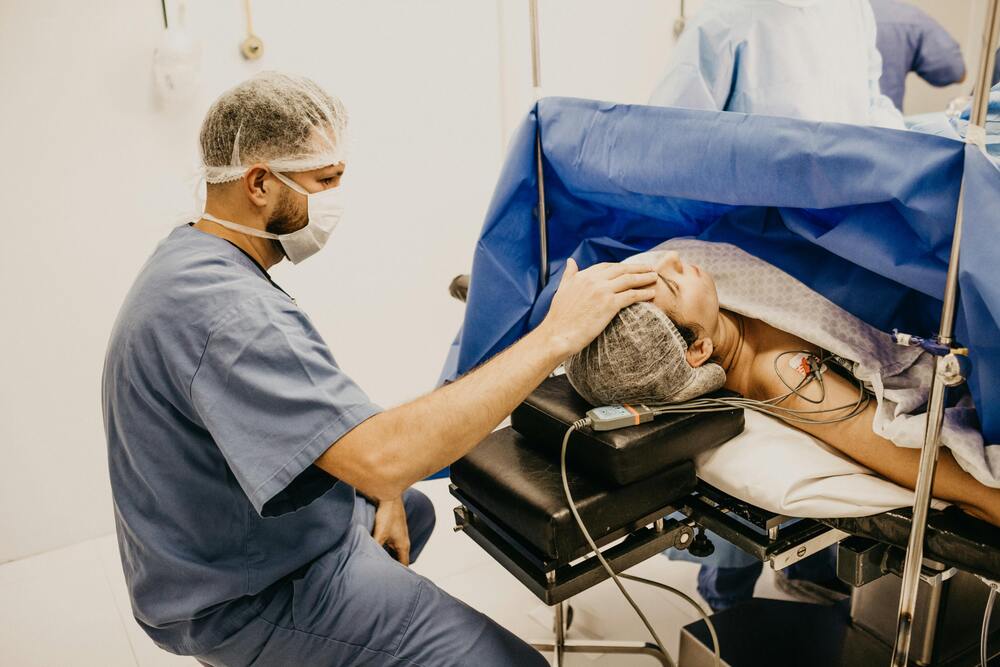
Essential for all surgical specialties, the anesthesiologist plays a crucial role before, during and after an operation. He or she is responsible for putting patients to sleep before surgery, monitoring them throughout the operation until they wake up, and managing post-operative pain to ensure their comfort. This specialist ensures that the patient's vital functions are maintained throughout the operation, adjusting anesthesia and reacting immediately to the slightest alert to guarantee patient safety. Their scope of action extends beyond the operating room: asanesthesiologists, they also work in intensive care units to treat patients in critical condition, and can be called upon in emergencies (e.g. to treat cardiac arrest or serious trauma).
After a long course of medical studies (around 11 years of training after the baccalaureate), the anesthesiologist obtains a specialized diploma in anesthesia-intensive care, enabling him or her to apply for anesthesiologist job vacancies. The path to this qualification is demanding, as are the day-to-day skills required. In this article, we detail the anesthetist's missions before, during and after an operation, the key skills required to exercise this profession, the training required to become an anesthetist, the scope of practice of this specialty and the careerdevelopment prospects for anesthesiologists.
The missions of the anesthesiologist
Preparing the patient for surgery
The anaesthetist'sfirst task is to prepare the patient for surgery, during the pre-anaesthetic consultation (mandatory before any scheduled operation). During this interview, the doctor assesses the patient's state of health, taking stock of his or her medical history (allergies, current treatments, past operations, etc.). This risk assessment enables the most appropriate anesthesia technique to be chosen (general anesthesia or local anesthesia), and the necessary precautions to be planned before the operation. The anaesthetist also takes advantage of this consultation to inform and reassure the patient, explaining how the procedure will be carried out, the planned protocols, the conditions for waking up and pain management after the operation. The psychological dimension is essential at this stage: the doctor must therefore be reassuring and educational in order to reduce the patient's anxiety.
Monitoring during the operation
During the operation, the anesthesiologist is continuously present in the operating room, alongside the surgical team (see our neurologist job description). He or she administers anesthetic agents at the start of the operation - whether general anesthesia or sedation in the case of local anesthesia - then adjusts doses in real time throughout the surgical procedure to maintain the appropriate level of anesthesia. He constantly monitors the patient's vital signs (blood pressure, heart rate, oxygen levels, etc.) using sophisticated monitors and equipment, ready to detect the slightest anomaly. If necessary, the anesthetist can intervene immediately in the event of a problem during the operation: for example, by re-injecting medication, performing an emergency maneuver (assisted ventilation, cardiac massage, defibrillation) or adjusting the depth of anesthesia as required. They work in tandem with the nurse anesthetist (IADE), who assists them in monitoring the patient and applying safety protocols during the procedure.
Post-operative follow-up and pain management
After the operation, the anesthetist's responsibility is to accompany the patient to the recovery room (post-interventional care unit) to ensure a safe return to consciousness. He or she monitors the recovery phase, ensuring that the patient gradually emerges from anesthesia without any immediate complications (respiratory distress, heart rhythm disorders, hemorrhage, allergic reaction, etc.). An essential task at this stage is the management of post-operative pain: the anesthetist assesses the patient's pain and administers the appropriate analgesics to relieve it (morphine, local anesthetics via catheter, paracetamol, etc.). He adapts the analgesic treatment according to the intensity of the pain and the specific needs of each case, to ensure optimum comfort. This post-operative follow-up continues until the patient has recovered to a stable state. Finally, the anesthetist remains vigilant until the patient is transferred to the hospital ward or intensive care unit if his or her condition so requires, thus guaranteeing continuity of care after the operation.
Skills required for practice
Specialized medical knowledge
- Mastery of anesthetics : it's obvious, but anesthetists have a thorough understanding of the effects, interactions and dosages of the drugs used to put patients to sleep, keep them stable and treat any life-threatening complications.
- In-depth knowledge of equipment operation: on a daily basis, he/she uses complex devices such as anesthesia machines, ventilators and monitoring monitors, and masters their settings to ensure safe patient care.
- Precision in performing technical procedures: dexterity is essential for performing local anesthesia (epidural, nerve block) or invasive technical procedures in intensive care, such as tracheal intubation or placement of central venous catheters.
- Mastery of anesthesia and intensive care procedures: the anesthetist rigorously applies proven protocols adapted to each clinical situation, guaranteeing patient safety at every stage of care.
- Cross-disciplinary knowledge of specialized medicine: anesthetists care for patients with a wide variety of pathologies, and must therefore have a solid grounding in disciplines such as cardiology, pneumology, nephrology and diabetology, in order to anticipate risks related to the patient's overall state of health.
Reactivity and stress management in critical situations
- Reactivity : the ability to act immediately is essential, particularly in the event of a serious complication such as massive hemorrhage, anaphylactic shock or cardiac arrest on the operating table. The anesthetist must be able to make critical life-saving decisions in a fraction of a second.
- Stress management : whether in the operating room or intensive care unit, the anesthetist must keep his or her cool under all circumstances. They work under constant pressure, where the slightest error can have vital consequences.
- Lucidity : they must remain precise, methodical and focused, even when they have to intervene without preparation, for example, to operate on an emergency patient who is not fasting or whose medical history is not well known.
- Ability to adapt: each clinical situation is unique, and the anesthetist must adjust his or her protocols, dosages and technical reflexes according to the patient's condition, the type of procedure and any unforeseen circumstances that may arise during the operation.
Human and relational qualities
- Empathy and benevolence : the anesthetist is often the last face the patient sees before going to sleep. He or she must be able to establish a climate of trust, reassure and clearly explain the procedure, while taking into account any anxiety or apprehensions.
- Pedagogy and communication: informing patients and their families at every stage of the care process, using accessible words and a constant concern to be understood.
- Emotional resilience: faced with serious medical situations, deaths or life-threatening emergencies, anesthetists must be able to manage their own emotions while remaining available, professional and supportive of others.
- Ability to work as part of a team: in both the operating room and the intensive care unit, anesthetists work in constant collaboration with surgeons, nurse anesthetists (IADE), instrument technicians and other specialists. Good communication and a collaborative attitude are essential to ensure a safe and efficient operation.
- Listening and flexibility in professional relations: the anesthetist must be open-minded, know how to adapt his or her posture according to the people involved, arbitrate medical choices as part of a team, and integrate harmoniously into multidisciplinary environments.
Training to become an anesthetist
The academic path required to become an anesthesiologist is demanding and rigorous. It requires the acquisition of advanced medical skills, both theoretical and technical, as well as solid practical training. The curriculum begins with a first year in the Parcours Accès Santé Spécifique (PASS) or Licence avec Accès Santé (L.AS), followed by two years of general medical studies leading to the Diplôme de Formation Générale en Sciences Médicales (DFGSM). Students then go on to study for a further three years, leading to the Diplôme de Formation Approfondie en Sciences Médicales (DFASM).
At the end of these six years, they must sit the final externat exams (EDN and ECOS), the results of which will determine their specialization. To become an anaesthetist, they then enter a five-year medical internship specialized in anaesthesia-intensive care, divided between hospital internships, university training and on-call duty. At the end of this course, he or she will be awarded the DES in anesthesia and will be able to practice as a specialist physician.
To find out more about studying to become an anaesthetist, see our fact sheet on studying to become an anaesthetist.
After this training, doctors can choose to specialize in certain fields, such as surgical resuscitation, pediatric anesthesia, obstetric anesthesia, pain management or perioperative medicine. These specializations open the way to highly sought-after positions in public and private facilities.
Anesthetists' scope of practice
Anesthetists work mainly in hospitals, whether in the public sector (university hospitals, hospital centers) or in private clinics. On a day-to-day basis, anesthetists divide their time between a number of complementary locations and departments, and work in close collaboration with many other medical professions.
Working in the operating theatre
Most of a physician-anesthetist's work takes place in the operating room, where surgical procedures are performed. For every operation - whether scheduled or emergency - the presence of an anesthetist is essential alongside the surgeon. He or she is responsible for anesthetizing the patient at the start of the operation, and for monitoring the patient throughout the procedure, right through to the recovery room. An anesthetist may perform several operations in a single day, working in a variety of specialties (orthopedic, abdominal, cardiac, neurological surgery, etc.), making his or her schedule often dense. Before each operation, he or she prepares and carefully checks the anaesthetic equipment, to be ready for any eventuality. During the operation, the anesthesiologist continuously adjusts the anesthetic parameters according to the course of the operation and the surgeon's needs, requiring close coordination with the latter. At the end of the operation, the anesthetist accompanies the patient to the recovery room for further treatment (as described above), before moving on to the next patient scheduled for the day.
Intensive care and emergency operations
Outside the OR, anesthetists frequently take on the role of intensive care physicians (the specialty is officially called anesthesia-intensive care). In the intensive care unit, anesthetists take charge of patients in critical situations, with serious vital failures (coma, acute respiratory distress, hemorrhagic shock, sepsis, etc.). Their role is to stabilize these patients, diagnose and treat the cause of their condition in an attempt to save them or improve their prognosis. They implement advanced resuscitation techniques adapted to each case: respiratory assistance on a ventilator, hemodynamic support with vasopressor drugs, dialysis in the case of renal failure, etc. At the same time, anesthetists are called upon to manage vital emergencies within the hospital. Similarly, in the case of emergency surgery, anesthetists perform emergency anesthesia, even without prior preparation of the patient.
The anesthetist may also intervene in the emergency department to secure a difficult intubation or sedate an agitated patient. These interventions outside the operating theatre are an integral part of the anesthetist's job, and are carried out during night shifts, weekends or public holidays. Indeed, the 24-hour continuity of care in hospitals (emergencies, maternity wards, etc.) makes it essential to have anesthetists on call at all times, involving regular on-call duty at nights and weekends. This rhythm of on-call work is part of the daily routine in the specialty, although some structures offer more regular conditions.
Collaboration with surgeons and other specialists
Anesthetists always work as part of a team, in coordination with other healthcare professionals. In the operating room, he or she forms an indispensable pair with the surgeon: the two must synchronize throughout the operation, one adapting anesthesia to the other's gestures and vice versa.
The anesthetist also supervises the OR nursing team: in particular, he or she supervises and works closely with the state-qualified nurse anesthetist (IADE), who prepares the equipment, monitors the parameters and assists the doctor during the operation and in the recovery room.
In intensive care, the work is just as collective: the anesthesiologist is part of a team that includes intensive care physicians (if the department has one), intensive care nurses, orderlies, physiotherapists, etc., each contributing their expertise to ensure the best care for critical patients.
Anesthetists may also interact with many other specialists, depending on the patient's case: for example, with cardiologists or neurologists in the intensive care unit for specialist advice, with obstetricians to manage obstetric anesthesia (epidurals in the delivery room), or with radiologists and gastroenterologists for sedation procedures (MRI, endoscopy) requiring anesthetic support. This constant interdisciplinary collaboration demands excellent communication skills and an unfailing spirit of cooperation from the anesthetist. In fact, the anesthetist is often perceived as a discreet but indispensableconductor, liaising between the various players to ensure that everything runs smoothly.
Career development and prospects
Specialization or superspecialization
An anesthetist's career can be enriched by additional specializations or skills acquired over time. As early as their residency, future anesthesiologists can opt for additional training (specialty options or cross-disciplinary specialized training) to develop a particular expertise, for example in pediatric anesthesia to focus on children.
Throughout the course of their practice, they also have the opportunity to take further training courses and add new strings to their bow: some choose to train further in chronic pain management (algology), medical hypnosis, advanced locoregional anesthesia, etc. At institutional level, there are a number of ways in which doctors can complete their specialization: they can apply for a new option or FST (cross-disciplinary specialized training) related to anesthesia-intensive care, in order to deepen their knowledge in a particular field without having to repeat an entire internship.
For the most ambitious, it is even possible to take a second DES (specialty diploma) in order to practice another specialty in addition to anesthesia (for example, some combine anesthesia with a specialty such as emergency medicine or medical resuscitation). Although lengthy, these super-specialization paths help to broaden professional prospects and enrich practice.
Hospital responsibilities
There are many career opportunities for a young qualified anesthetist, especially as the specialty is in short supply: there are only around 10,000 anesthetists in France, and the profession remains in short supply, with vacancies in many establishments (public hospitals, private clinics, emergency departments, etc.).
At the start of their careers in public hospitals, anesthesiologists hold the rank of hospital practitioner and join an existing team. With experience, he or she can progress to managerial and medical leadership roles: becoming head of an intensive care unit, operating room coordinator or head of the anesthesia department within a hospital. These positions of responsibility involve managing a medical and nursing team, organizing the department's activity and participating in the definition of protocols and strategic orientations.
In the private sector, many anaesthetists choose to work in private practice, often joining forces with several colleagues in a clinic to ensure a continuous presence and share on-call duties. Private practice confers greater autonomy, but also involves management tasks (see our article Working as a doctor in France: the three healthcare sectors).
Whatever the type of practice, the anesthetist's job involves heavy medical responsibilities on a day-to-day basis: every decision taken under anesthesia potentially affects the patient's vital prognosis. In intensive care, in particular, the cases treated are serious, and the mortality rate can be as high as 20% in some units, illustrating the difficulty and constant vitality of this specialty. This acute responsibility for the care of often fragile patients makes anesthesia-intensive care a demanding profession, where experience and professional maturity pave the way to key roles within healthcare establishments.
Teaching and research opportunities
In addition to their clinical activities, senior anesthesiologists can diversify their careers by moving into teaching and/or research. Many anaesthetists become lecturers in university hospitals (CHU) or medical faculties, to train interns and pass on their knowledge to new generations. They may supervise medical students, anesthesia interns or act as instructors in nurse anesthesia schools.
On the research front, the specialty offers a wealth of opportunities: anesthesiologists can take part in clinical studies on new anesthetic drugs, research projects in physiology or work with the pharmaceutical industry to develop innovative products and protocols. Some work in academic research units, while others carry out research within their own hospitals, contributing to the advancement of scientific knowledge. Anesthesia-intensive care is a constantly evolving specialty: new anesthesia techniques and protocols emerge regularly, prompting practitioners to pursue ongoing training to stay at the cutting edge.
Last but not least, a career as an anesthesiologist allows you to take part in international humanitarian missions, in theaters of war or in developing countries, where your skills in anesthesia-intensive care are invaluable in saving lives. These extraordinary experiences enable them to broaden their professional horizons while putting their expertise at the service of causes of general interest.
A shadow profession par excellence, the anesthesiologist is nonetheless a pillar of the French medical system: thanks to their advanced technical skills, expert pain management and unfailing composure, they ensure patient safety in both the operating room and the intensive care unit, and help to constantly improve the quality of care.
You liked this article and would like to learn more? Check out our anesthesiologist salary sheet!
This offer may be of interest to you
Jober can accompany you on your next professional adventure. Take a look at our special offer.
Anesthesiologist (M/F) - Loches, 37
Employee
4000 - 8000 per month
Loches
As part of its business expansion, a hospital in Loches, in the Indre-et-Loire department, is seeking a new anesthesiologist (M/F). Requirements - Hospital physician, contract physician, or resident - Full-time The Facility You will join a local hospital in Loches that is part of a regional hospital network and affiliated with a regional university hospital. The anesthesia team consists of two anesthesiologists and one certified nurse anesthetist (CNA) per operating room, ensuring that you will work in pairs and that operations are well-organized. The operating suite includes three operating rooms and a post-operative monitoring unit with six stations, performing approximately 1,850 procedures annually. The facility also has an emergency department with acute care beds and a mobile emergency medical service (SMUR) unit, as well as medical wards, a post-acute rehabilitation unit, and a medical-surgical day hospital. Compensation - Based on the pay scales for hospital physicians/contractual staff under categories 1 or 3 Responsibilities - Providing perioperative anesthetic care for patients across various surgical specialties - Conducting preanesthetic consultations - Monitoring and care of patients in the post-operative recovery room (SSPI) - Close collaboration with surgical and paramedical teams - Participating in the organization and planning of operating room activities - Assisting with the management of emergency situations in coordination with the relevant departments Benefits - Versatile operating room with a diverse range of procedures - A well-organized team and a close-knit work environment - Pleasant living environment near Tours - Easily accessible location near a train station That Extra Something Loches offers an exceptional living environment with its medieval heritage, historic keep, ramparts, and a lively local market. Additionally, its proximity to Tours provides easy access to a wider range of cultural offerings and services while allowing you to enjoy a quieter lifestyle. Qualifications An anesthesiologist licensed in France or the European Union, currently registered with or eligible for registration in the French Order of Anesthesiologists. Contact us at: 07 44 71 65 08 or by email at [email protected]. Job Posting ID: 13074 Candidates from the European Union: Jober Group, the leader in onboarding healthcare professionals in France, will assist you free of charge until you begin your new role - Introduction to our partner professors - Assistance with registration with the Medical Board - A dedicated consultant to support you Find over 4,000 healthcare job openings on our Jober Group website and mobile app. Take advantage of a network of 1,000 partners throughout France, a team of recruitment experts ready to assist you, and a completely free service that 99% of our candidates are satisfied with.
Anaesthetist M/F - Ajaccio 2A
Liberal
6000 - 12000 per month
Ajaccio
Job Anesthetist - Ajaccio 2A Are you looking for a position as an anaesthetist in Ajaccio? If so, we're offering a one-month replacement assignment in January, with the possibility of association thereafter. DNA of the structure You will be working in a modern private hospital in Ajaccio, with a recent infrastructure focused on quality and innovation. The facility has a large ambulatory platform with 80 places and a 12-bed UFS unit. Medical and surgical specialties are widely represented, with the exception of maternity and heavy digestive care. The organization favors safe care, multidisciplinary collaboration and a working environment without on-call duty. Ajaccio offers an attractive lifestyle, regional air and sea access, and an environment conducive to long-term relocation. Description and missions - Replacement mission in anesthesia-intensive care over the whole month of January - Four days a week - Responsible for perioperative anesthesia and intensive care follow-up, depending on activity - Work in close collaboration with surgical teams and specialized nursing staff - No on-call duty associated with the position - Possibility of moving into an association, depending on profile and terms to be discussed - IADE planned for 2026 to reinforce OR organization Compensation For this position, you will be paid €900 to €1000 per day. A daily salary of 600€ is offered in the case of salaried employment. Benefits - Replacement with possibility of later association and organization over 4 days a week - Attractive daily remuneration - Modern technical platform and eco-responsible infrastructure - 80 outpatient places and 12 UFS beds within a comprehensive care offering - No on-call duty - Accommodation and transport provided - IADE reinforcement planned from 2026 Profile sought Qualified anesthetist-intensive care physician, registered or eligible for registration with the French Medical Association (Conseil de l'Ordre des Médecins); position open to accompanied and trained candidates Contact us on: O7 44 71 65 O8 or by e-mail at [email protected] Ad reference : 11323 Candidates from the European Union JoberGroup, leader in the integration of healthcare professionals in France, supports you free of charge right up to the start of your activity - Language training (Level B2) - Contact with our partner teachers - Follow-up for registration with the French Medical Association - Dedicated consultant to support you Find over 4,000 healthcare job offers on our Jober Group website and mobile application. Benefit from a network of 1,000 partners throughout France, a team of recruitment experts at your service, and a totally free service that 99% of our candidates are satisfied with.
Anaesthetist M/F - Montélimar 26
Employee
4000 - 5000 per month
Montélimar
Job Anesthesiologist M/F - Montélimar 26 We are recruiting an anaesthetist M/F to join a hospital located in Montélimar, in the Drôme Provençale region, as part of a salaried or self-employed contract. Description and missions We're looking for an anesthetist for the operating room or an intensive care anesthetist for the intensive care unit (12 intensive care beds, 6 continuous care beds). You'll be joining a dynamic team of 8 practitioners in the OR and 7 in the ICU. Depending on your preferences, you may work exclusively in anesthesia, in intensive care or in both units. The activity is organized in continuous time with a balanced rhythm including a guard and two weekly days, on the basis of 40 weekly hours. Additional time is possible. Structure DNA The medium-sized establishment offers a complete medical environment with a high-performance technical platform. It has 730 beds in medicine, surgery, obstetrics and EHPAD, 8 operating theaters, a multi-purpose intensive care unit and continuous care (18 beds), as well as an emergency department handling between 50,000 and 55,000 visits per year. It is located in Montélimar, a fast-growing town of 40,000 inhabitants, ideally situated in the Drôme Provençale region, at the gateway to the Ardèche. Served by the TGV high-speed train and freeway, it is about 1h30 from Lyon, Marseille, Grenoble and Montpellier. It offers an attractive living environment, with numerous cultural and sporting activities. Compensation - Compliance with Motif 1 step 6 regulations, with the possibility of a Motif 2 proposal - 30,000 € commitment bonus - 30,000 hospital career commitment bonus (PECH) for anesthetists and radiologists Benefits - 40-hour working week, with the possibility of additional hours - Experienced and dynamic medical team - Possibility of working on several units according to preference - Easy access to continuing education and research - Installation assistance and housing facilities Profile sought Anesthetist (M/F) with a degree recognized in France and registered with the Conseil national de l'Ordre des Médecins. Contact us at : O7 44 71 65 O8 Advertisement reference : 9936 Candidates from the European Union: JoberGroup, France's leader in the integration of healthcare professionals, will accompany you free of charge right up to the start of your activity - Language training (Level B2) - Put you in touch with our partner teachers - Follow-up for registration with the French Medical Association - Consultant dedicated to your support Find over 4,000 healthcare job offers on our Jober Group website and mobile application. Take advantage of a network of 1,000 partners throughout France, a team of recruitment experts at your service, and a totally free service that 99% of our candidates are satisfied with.
See all available offers for this category